Showing posts with label heritage temple to renovate. Show all posts

Sunday, January 09, 2011

Heritage trip - 4th Dec 2010 with Kathie

The plan was to see Thirupparkadal, Thiruppukuzhi, Dammal and Poigainallur temples, as announced. And we were to return to Thakkar Baba Vidyalaya Vinobha Hall by 3 pm, so that Kathie’s lecture can be held on time.

But fate had a different call all together!

Ever energetic Kathy@ Katherine@ Sivadasi joined a select few on 4th, which included Dr.T.Satyamurthy too, who was explaining things to us.

We first landed at the Thirupparkadal Prasanna Venkatachalapathy temple whose mythology goes like this

But saddest part, the day started with a rude shock! Sands, sands everywhere! Around the sanctum sanctorum, around the Mandapa, everywhere where our eyes could reach, the masons, in the name of renovation were applying their best minds to modernize this heritage temple with all the weirdest materials which are a taboo for heritage work: Tiles, marbles, granite pillars cemented over, the poor cousins Jaya Vijaya standing unopposed to their cement ashes smear and so on. Even the open mandapas were not spared! The open sides were filled with brick mortar and tiles were laid as final finishes. The Vimanas were worst hit. They were just refilled with cement finishes.

Here comes the death knell:

SAND BLASTING WAS HAPPENING IN FULL FORCE!

The facts are:

Cement NEVER plasters with granite and lime mortar.

Tiles will disallow any view on natural expansion and contraction of lime mortar or stone works, to enable us repair in future.

The cemented of pillars were done not to strength\then any lintels, but to fill some greedy contractor’s/ officials coffers.

Sand blasting creates micro fissures into the granite structure, thereby truncating its life by just another 10 years or so. The reason is, the surface hardness of granite is lesser than the sand’s surface hardness which is bombarding with great force. Also sand blasting permanently removes away the inscriptions if any around the sanctum sanctorum.

With heavy hearts we went to the adjacent Adiranganatha temple, where the inscriptions are intact around the sanctum sanctorum but sadly the evil force @ contractors’ next target was this temple! Will the concerned HR&CE authorities take note of this blatant violation of rules laid for renovating heritage temples and stop the menace? The Adiranganatha is an excellent piece of work believed to be more than 1600 years old, as it was in Fig tree (Atthi maram). See pictures here.

Then we went on the main road, to reach the rarely visited Karapureeswarar temple, which had inscriptions as early as that of Paranthaka’s and some stunning icons around the sanctum sanctorum, in the goshtas; we also saw a Jestha Devi sculpture intact with his son and daughter, Gomukan and agnidevi. Here, the priest had passed away few years before and the priest’s wife had taken over the mantle. Modern Karaikkal Ammayar indeed! We talk of woman empowerment and her we see a woman already doing that. But the sad reality is that, income is sparse, no thought of any renovation, in this temple, where the inscriptions and icons are of great importance and the old temple gopura has some eloquent old reminiscences of fine stucco wok. We seek philanthropists to think and act on how to do some basic repair work in this temple and save our heritage.More than that any steady income for the priestess can also be planned. REACH will surely support any such endeavour. See pictures here.

Next, crossing the Bangalore highway, we went to the Azagiya Ramar temple (See a fantastic record of all temples in Kaveripakkam in this blog).

The presiding deity is Vishnu and the Ramar shrine is on the left hand side when you enter the temple. Signs of Pallava workmanship is evident and also the Thayar shrine has its share of inscriptions, all fragmented and distorted stamping the presence of Chola domain. Modern renovation again has removed most of the antique look here, but the Rama, Sita; Lakshmana idols are fantastic, as they replicate bronze idols in every sense. Just think of using granite instead of bronze! So, is the fine artistry that we feel the deft handedness of the sculptor, who had brought the delicate finish of bronze in granite. Also seen were some fantastic carvings of windows and steps in granite. See pictures here.

Next to the Ramar temple, very close is the Selliamman temple, where we waited for almost an hour to get the doors open to have a look at the main deity, which we believe should be one of the oldest reliefs of Chola regime. But luckily, we saw some very old idols stuck on the compound walls, of early craftsmanship depicting Shiva and also the icon from which the design of Mangalsutra (Thali) was derived! Also, a beautiful carving on the pillar of a woman saint with long Jadamudi was also seen. See pictures here.

Next, we went to the nearby Abaya varadar which also can be spelt as Abaaya varadar (as we spell in Tamil அபயவரதர் அபாயவரதர் ஆகிவிட்டார்!) s we see the state of maintenance around the Temple. Believed to be older Pallava Shrine, renovated by the early Cholas, the miniatures in the pillars around the sanctum sanctorum are a `must see’ work and the flying devatas and ganas, Ramayana scenes in the arda Mandapa now white washed with lime are also a ‘must see’ figures. The temple is surrounded by cow dung and blackish gutters a reservoir for mosquito breeding and there was no electricity for us to view the temple properly for long hours! Temple cleaning groups, Vaishnavaite devotees please take note of this temple for your next cleaning operation and the temple is under private control and the priests are also not available. Some local enthusiasts have taken the mantle of priesthood and are offering the daily rituals and prayers. The Krishnadevaraya Mandapa just outside the temple is also in a dilapidated condition, full of filth and cow dung. In fact it serves as a cow shed for the locals now! See pictures here.

Coming with a sad heart, we were surprised to see a Old mosque built with temple artisans and granite, just slightly ahead of the temple, on the left hand side. This is also badly encroached and there is no direct access to the mosque. Beautifully done, this also serves as a cow shed. A broken Urdu inscription lies there and the mosque also needs immediate conservation measures. The story goes like this: when the Muslim invaders wanted to plunder the Abhaya Varadar temple, the artisans made this mosque with all features which are seen in a temple and proclaimed that the temple has already been converted to a mosque and thus saved the Abaya Varadar temple behind. This mosque is also a beautiful testimony to ancient architecture and REACH seeks attention and help from our heritage lovers and Muslim brethren to also save this heritage mosque, which would be the ONLY mosque which was originally built with granite temple like pillars and structure with minars above made of lime stucco (not temples being converted into mosques, like we see in many places).See this picture and a few pictures next to this, showing various angles of the mosque in worn our condition.

Also see member Shriram's photos here

An article appeared in Times of India dated 11th January 2011 , thanks to Saju the reporter, who responded immediately.

Here is the link

There were some more ancient temples we were to visit, but paucity of time and threatening rains made us rush back to Chennai, as the evening was waiting for Kathie to deliver her lecture in Thakkar Baba Vidyalaya, Vinobha Hall the same evening.

So, we have some more to chew in days to come: Another visit to Kaveripakkam, Dammal, Thiruppukuzhi and Poigainallur. The Gods are nice and they wait!

Tuesday, May 12, 2009

Lime removal at Varadaraja Perumal temple -Kanchipuram

The famous Varadaraja Perumal temple in Kanchipuram is known for its intricately carved 100 pillar mandap. Due to ignorance, it was white washed for ages and the pillars now have thick coats of white wash mostly at the bottom half of the pillars and the mandap's periphery. A philanthropist, native of Kanchi,is now a famous patent lawyer having office at almost all the cities in India, had vowed back to get his beloved deity's temple back to its glory and he had selected REACH for the cleaning of this pillar mandap, the kitchen (filled with black carbon soot, again settled on the walls for ages). So we had started the work last week and have put the best ASI trained workers and one full time supervisor for this task. First phase comprises of the mandap work, later after few months we'll be cleaning the whole kitchen (madapalli for Thaligai) to remove all the soot and carbon using scientific methods.
See the pictures here..

Tuesday, April 21, 2009

Heritage tour - Thiruvadigai or Thiru adigai

Thiruadigai or Thiruvadigai is the first place near Panruti we visited en route to Kumbakonam while going for our Symposium for Heritage Wardens held during 1st week end of January 2009.

This temples is a beauty of sorts. No words to describe.

Dr. Nagaswamy in one of his writings write as:

At Thiruvadigai there are a few archaeological relics which deserve notice. The Virattana temple at this place is a Pallava foundation carrying inscriptions of the Pallavas Paramesvaravarman, Tellaru erinda Nandi and Nrpatunga. Paramesvara’s inscription relates to another shrine of this place. Nandi’s inscription refers to a gift of gold for worship in the temple while, that of Nrpatunga, refers to renovation to the temple, carried out by him. In the pakara, at the western end there is a Caturmukalinga, decidedly a Pallava sculpture of 7th century A.D.

The story in Dinamalar in Tamil is still elaborate.

Life of Appar, his conversion from Jainism to Shaivism, this temple where the first Devaram was sung, and the first ever place where 'temple cleaning' (உழவாரப்பணி) took place from the hands of Appar / Thirunavukkarasar is worth reminding here.

The photos are here to see


Me and Natarajan always look out for rare sculptures and unknown beaties of the temple. See the two sculptural stone reliefs.. on the pillars of the front mandap at the entrance. Any explanations or mythological stories available for the same? Reader please explain me.

Also were stunning the rare mohinis in the entrnce and different dance poses we see, as we enter in.

Now, we see also a big stone sculpture in sitting posture as soon as we enter the temple facade,on our right, and yell with joy, "Hey, see Buddha statue, this proves this site is ancient than ever, atleast Buddhism survived here some 1800 years ago!

"Why is it confirmed as a Buddha? Why not Jaina Theerthangara statue? " asked my friend Natarajan. Why... I explained. Readers please come back with your answers to claim whether it is a Jaina Statue or a Buddha statue..

Also impressive were the paintings on the ceilings at the front mandapa of the temple. See pictures..

I wish they are not destroyed in the name of Kumbabishegam Samrokshanam, renovation by the HR& CE.. as how it happened in Madurai Meenakshi temple, in Thiruppulivanam, and many more temples. These paintings are real stunners and we should protect them from removal, white washing and graffiti.

Also, another repetitive feature of Pallava period temples are that the availability of Somaskanda Murthy / Parvathi full decorative sculptures seen behind the Shiva Linga, mostly made of limestone.

here this Thiruvadaigai temple has the biggest Somaskanda murthi (family portrait!) surrounded by Brahma and Vishnu, sizes of say, 8 to 10 feet! The lighting inside is very poor and so we could not see them properly. I requested the priest to show the deepa aradhana twice to ensure what I saw was believing! Such a big somaskanda !!!

Also unique are the over flowing scultpures around the sanctum sanctorum.Sadly the originallime sculptures are recoated with heavy and gaudy acrylic paints,which look horrible. Otherwise the originals would have made them more austere, authentic and elegant, ala..heritage vintage stuff.

PIL should be applied to stop sand blasting, usage of modern paints and materials in renovating temples; May be then, the Governments would not tamper such priceless beauties..

Thiruvadigai makes one visit this temple again and again..

Next week I will try to write on Innambur and Thiruperambiyam we saw near Kumbakonam...

Wednesday, December 20, 2006

Uttaramerur

Twice last few months; we had visited Uttaramerur (as spelt by Kalaimamani Dr.Nagaswamy, retired-Director of Tamil Nadu state Archeaology Dept. Most write up is diligently reproduced from his book, Uttaramerur which gives a full detailed information on the temples, history, the stone inscriptions, the people, etc.) And were fascinated by the Grandeur and splendor of the town (village?) This place, a historically important site, has beautiful pieces of history with it, intact, some lost and some trying to regain glory.

Few highlights:

Called as Uttarameru Chaturvedimangalam , Rajendra Chola Chaturvedimangalam, Vijayagandagopala Chaturvedimangalam, Vadameru Mangai, Uttaramelur, Pandavavanam, Panchavaradha Kshetra ( sorry for the spellings, I slightly modified against what is seen in the book, to encourage correct pronunciation) .

Established by Nandivarma II Pallava in 750 AD, two temples

1) Sundaravaradha temple (a model for our Ashtalakshmi temple in Besant Nagar) whose statues are made of lime mortar and stands against time till today, walls adorning great natural colored paintings, as well as

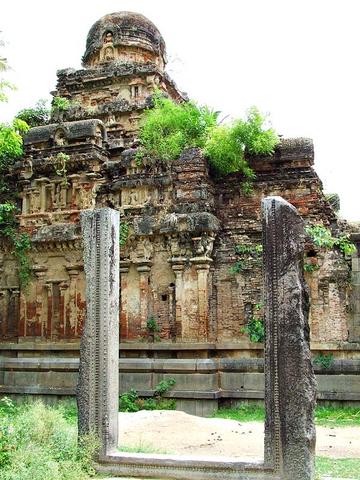
2) The Kailasanathar Temple (which is in ruins and our REACH team has started the renovation work!!!) – with the help of the Sundaravaradha Temple trustee, Mr.Seshadri and his team's efforts) were almost built immediately.

3) Also a stand out is the Vishnu temple, near the current bus stand. This temple is now under the ASI maintenance.

This temple holds the stone inscriptions almost covering the whole periphery of walls as well as platforms raised to preserve the stone inscriptions which talks about ADMINISTRATION AND DEMOCRACTIC RULES laid out by the then Chola rulers!! (920AD Paranthaka Chola).

The highlights of the rules are briefed here:

The election process!

The nominees' names written on a pre-designed palm leaf and drop in the common pot (Kodavolai in Tamil). On the election day, amidst all seniors, officials and common public, the oldest priest of the temple selects few from the pot randomly and transfers the content into another pot. From this, one name is picked by a small boy amidst the crowd, who does know what the contents of the pot are! This is read out by the chief election officer and thus agreed upon. So goes the full lelection for various heads, committees etc.

The nominee should fulfill the following criteria:

-He must own more than a quarter veli of tax paying land
-He must live in ahouse built in his own site
-His age must be below 70 and above 35
-He must know the rules and the intricacies of the law (Mantra-prahmaana) and be capable of explaining it to his people
-If the nominee has just 1/8 th of the stipulated land, then also he is eligible if, he has learnt the veda, and one of the four bhashyas (commentaries) and be able to explain to others.

Among those who possess the foregoing qualifications:

-Only those who are well conversant with the business and running affairs will be taken and
-One who possess honest earnings, whose mind is pure and who has not been on any of the committeesfor the last three years shall also be chosen.

The disqualifications are:

-One who has been in any of the committees but has not submitted the accounts, or one who has accepted bribe in any form and all his relations, specified below, shall not have their names written on the pot-tickets (contestants).
-The sons of the younger and elder sisters of his mother
-The sons of his paternal brother of his mother
-The Uterine brother of his father
-His Uterine brother
-His father in law
-The husband of his uterine sister
-the sons of his uterine sister
-the son-in-law who had married his daugther
-His father
-His son
-One against whom incest (agamyagamana) or the first four of the five great sins are recorded;
-
All his relations above specified shall not contest after one stands for election in the same given year.

And further disqualifications are:


-One who is foolhardy
-One who has stolen the property of another
-One who has taken forbidden dishes of any kind and who has become pure by performing expiation
-One who has committed sins and has becoming pure by performing expiatory ceremonies
-One who is guilty of incest and has becoming pure by performing expiatory ceremonies

All these thus specified shall not dare to commit suicide after elections, those who have their names written on the pot-ticket for any of the committees.

Further there had been committees for all activites like tank and water management, accounts authority, CBI, and what not those found guilty at the time of being in ower are removed immediately, if there bad deed comes to light!

And so goes this fullbook, authored by Dr.Nagaswamy in his bilingual book (Tamil & English) UTTARAMERUR. Also mentioned in the book arethe various other temples in the nearby vicinity, there importance, the street names having gods and goddess names, the various educational trusts, the social activity, festivals and so on. The book is available at all leading book stores as well as in front of the Sundara Varadhar Temple at Uttaramerur.

One who reads this can only sigh a deep breadth as the nostalgia is infectious! We really yearn to go back in the time machine to really live in such a great city UTTARAMERUR. Uttaramerur is just an hgours drive from Chennai by car, near Chengulput and the temple renovation work of the Kailasanathar temple will soon start with the guidance of REACH founding members.